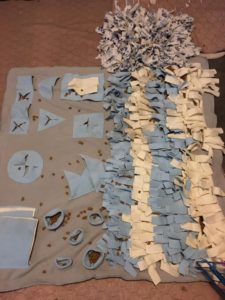
It’s easy to think that what matters most is fancy parents with fancy titles and lots of trophies, because that’s what we have been told makes a good breeder. But that’s really just not the case - while genetics do matter, unless you are purchasing a puppy for sport or show those titles and awards don’t mean anything. You want great companion genetics and those are different than great show dog genetics.
Further, we now know that environment is vitally important to the long term outcome of dogs, both in health and behavior, and that something as simple as the pen the puppy is raised in can affect their brain size as an adult dog! We know that mothers who grew up or are living in distressing environments pass genetic changes in health and behavior on to their puppies, just like humans can. We know that mothers who are not kept free of internal parasites pass huge parasite loads on to their puppies, even if they are free of worms when gestating. We know what something as simple as a mother having enough DHA while her puppies are forming, and on just the exact right day, can cause her puppies to struggle with learning, fear, and adaptability throughout their lives. The importance of the environment in the long term outcome of a dog continues to unfold before us, and makes puppy raising protocols even more important.

It’s really impossible to understate how interrelated physical and behavioral health are, so we will cover both here. Our Puppy Raising Protocols are loosely divided into physical health and behavioral health. While these protocols are started young, make no mistake, their effects reach far into the future life of your dog.


It’s extremely important to us that you bring home the healthiest puppy possible And we work closely with our veterinarian to ensure this happens.
Physical health is vital and for puppies there are three major areas of focus.
1. Cleanliness: Puppies who are raised in unclean environments are more likely to become unwell and to carry large parasite loads. Behaviorally, they carry unclean habits into their adult life, making them more difficult to house and crate train.
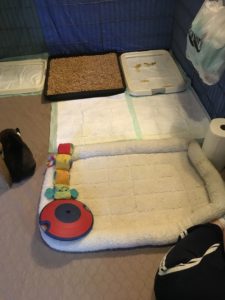
Every litter is raised using our Poop School Litterbox method. Poop School teaches puppies from a very early age to prefer being clean, to be thoughtful of where they go potty, and sets every puppy up to be easy to house train in the new home. Every new owner has free access to the Poop School House Training Course to help you continue our cleanliness training in your home and effectively house train your puppy.
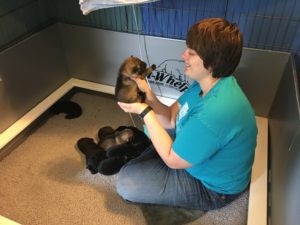
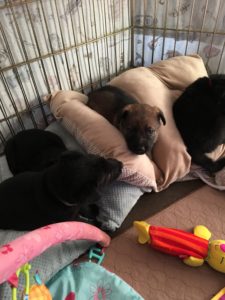
Since our puppies are born and raised in our home, keeping them clean is easier because someone is always nearby to address messes and tidy the weaning pen. Bedding is changed regularly throughout the day, so puppies do not become dirty or used to being close to their own waste. Puppies have a large indoor and very large outdoor “puppy patio” accessible to them after 4 weeks of age, so they can start learning to relieve themselves outside. Cleanliness for home raised puppies is very similar to how you manage and house train a puppy once you bring it home, unlike kennel raised puppies our puppies have ”live-in caregiver” that cleans up after them, while teaching them age appropriate clean habits. In the name of transparency we have a live “puppy cam” going 24/7 once the puppies move into the larger weaning pen, so you can check on your puppy, and the condition of the pen, at any time during these important weeks.
2. Preventive Medicine: We are big advocates of preventing illness, and we work closely with our reproductive specialist to design a well puppy plan to prevent disease whenever possible. Diet is a cornerstone of raising healthy puppies, so both mothers and puppies are fed Purina diets that are designed by veterinary nutritionists, well researched, and rigorously tested for gestation, lactation, and the weaning and raising of large breed puppies. By using an evidence based high quality dog food brand, we ensure that our puppies have what they need to develop into healthy dogs, including appropriate amounts of DHA for long term brain health and learning. This will also include regular age appropriate vaccination against contagious diseases like parvovirus and distemper using standard AMVA/AAHA schedules. Prophylactic deworming using AVMA and AAHA recommended schedule (at 2-4-6 weeks with Pyrantal Pamoate and at 8 weeks with Fenbendozole) and regular ELISA fecal testing is performed as recommended by our veterinarian. Puppies are promptly treated for any parasite or pathogen identified via this testing. Our mothers are also on a wellness schedule designed just for mother dogs, this includes appropriate vaccination to ensure they can pass strong immunity to their puppies, regular preventive worming to ensure their parasite load is very low, and regular veterinary well mother checks ups throughout their gestation. It is extremely important to us that you bring home the healthiest puppy possible and we work closely with our veterinarian to ensure this happens.
3. Physical Exercise: It’s vital for the growth of a puppy’s bones and joints that they have age appropriate exercise opportunities. We are strong advocates of evidence based exercise appropriate for their age and breed. This includes access to a safe and secure puppy patio that is large enough to allow for free-choice play and exercise, fresh air, and sunlight. The puppy patio is filled with objects and surfaces that allow puppies to safely build motor skills and strong muscles while they move around. Safety is important too, and we never exercise our puppies in ways that could harm the development of their bones and joints, such as jumping or “fitness courses” that some breeders use, or using excessive exercise to “tire puppies out” so they will be quiet in crates. There is good evidence and best practices for exercising puppies in beneficial ways and these focus on allowing puppies opportunities for self directed play and activities.

Cleanliness is vital and toilet training starts early

large outdoor area for nanny time and exercise

The Puppy Patio gives puppies plenty of safe room to play and socialize with the nannies.

Litterbox training ensures puppies think about where they potty.

Giving puppies the opportunity to potty outside early builds clean habits.

Litter box training means we have time for crates too.

Walks around the property allow for age appropriate exercise.

Clean weaning pen means healthy puppies

Full time caregivers mean puppies are almost always attended.

Free access to nannies and sunshine builds happy and healthy puppies.
Behavioral Health and Wellness
Highlights of our puppy raising during the first two months.
We adopted the Puppy Culture puppy raising protocols over a decade ago and have been exceedingly pleased with the positive long term effects we have seen. While the protocols in the program are not necessarily new, they are arranged in an evidence based manner designed to match perfectly with the stage of development the puppies are in. We have tweaked the protocols over the years to reflect the needs of the German Shepherd and our clients. We have designed and added our own protocols as needed to round out the help we provide to our clients, so you will find Poop School, Shark School, and Crate School lessons intermixed in our puppy raising right alongside the Puppy Culture work.
As seasoned puppy raisers there is simply no better puppy raising method than Puppy Culture and now that there is a follow up course for the puppies in their new home you can be assured of consistency from our work to your work when you bring your puppy home. For each method we use there is a new puppy owner version you will have access too as you take over puppy raising from us on send home day.
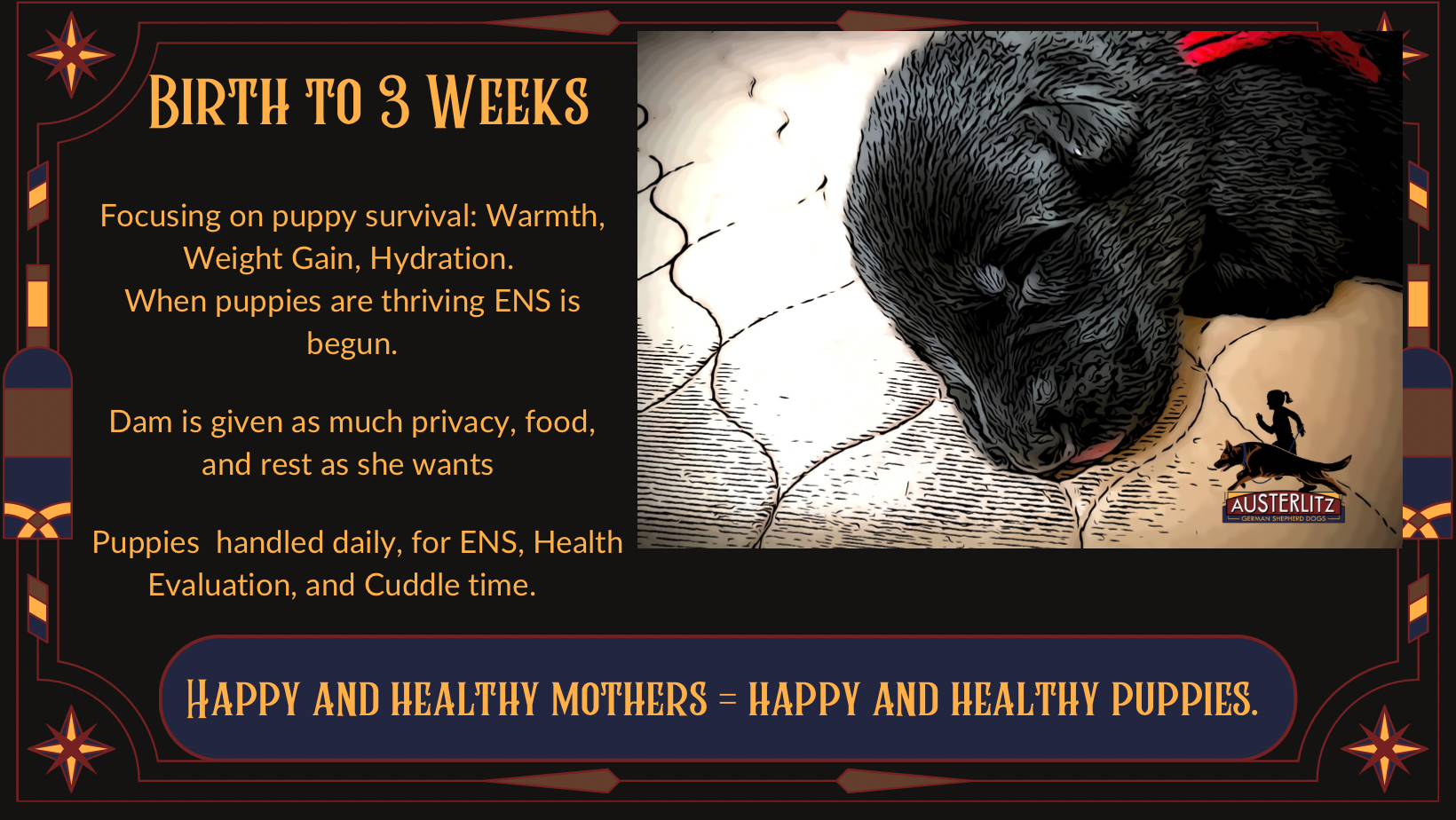
The first three weeks of a puppy’s life is filled with sleeping and eating, as they are carefully and constantly tended by their mother. During this time puppies needs consist of a caring mother, warmth, grippy and dry bedding, and lots of time for the hard work of growing. Our work is light during these day since German Shepherds are excellent mothers, consisting mainly of ensuring the puppy box is warm, dry, and draft free and the dam has all the privacy she wants. Stressed, unhappy, or unhealthy dams affect their puppies in a multitude of ways that can last a puppy’s entire life, so ensuring our mothers are healthy, happy, and content is vitally important.
1. Health and wellness are monitored twice daily, any puppy who is not gaining weight, content, breathing quietly and easily, ”popcorning” (the small muscle spasms that strengthen muscles) or dehydrated is given immediate support because during the first 21 days puppies are very vulnerable to dying.
2. Stable puppies have Early Neurological Stimulation started on day 3, puppies who are struggling in any way have Simulated Maternal Stimulation
3. As soon as puppies start urinating on their own a designated potty zone is introduced as the earliest foundation for our cleanliness training process.
4. Dam is allowed as much privacy and rest with her puppies as she desires. Typically our mothers want to spend 24/7 with their puppies for the first 14 days, and from there through the weeks she will gradually want more time away as she moves from the intensive care stage, to the teaching/play stage, and finally weaning (physically and socially) stages of her work raising her puppies.
5. We start conditioning the puppies to enjoy grooming by gently stroking them with a soft human baby hairbrush.

By week four our puppies are up on their feet, walking, starting to interact and play with each other, and the critical socialization period is underway. The dam is needing to spend more time away from her puppies, and the puppies start learning about how to be a dog from our skilled, puppy loving, nannies. The nannies role in socializing the puppies to the ways of dogs is invaluable.
While the tasks and work a skilled breeder does are too many to list, here are some highlights.
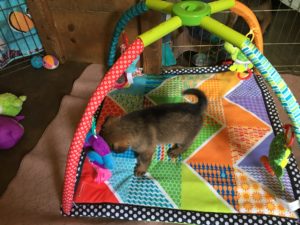
1. Puppies are moved to a larger, more interesting area, and cleanliness training continues with a designated toilet area. The indoor and outdoor puppy pen are kept scrupulously clean and provide room to exercise and play on age appropriate play gyms, this work is part of the important Enrichment Effect and is more than just cute, it’s actually building a stronger and better brain as much as a healthy body.
2. Puppies are offered solid food three times per day (dam can still nurse the puppies at will) in large puppy pans. Group feeding at this age fosters enthusiastic eating.
3. Regular socialization opportunities with our skilled puppy raising nanny dogs, and with us.
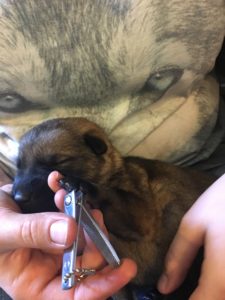
4. Grooming (soft brushing) and nail trims continue.
5. Puppy Culture work continues (please look over the link for more info on the PC work).
The puppies are also moved to a larger puppy pen in the heart of the house, as the dam is no longer as protective of her puppies as she was at first and she’s happy to share their care with us and the nannies. In the heart of the house the puppies have more opportunities to become accustomed to household sights, sounds, and have lots of opportunities to socialize with us and the nannies. Puppies have meals offered three times per day now, at first in a puppy pan, and in later weeks in individual bowls in crates.
We are continuing to work with the Puppy Culture protocols and this work will continue right through until send home, as will cleanliness training, and socialization.
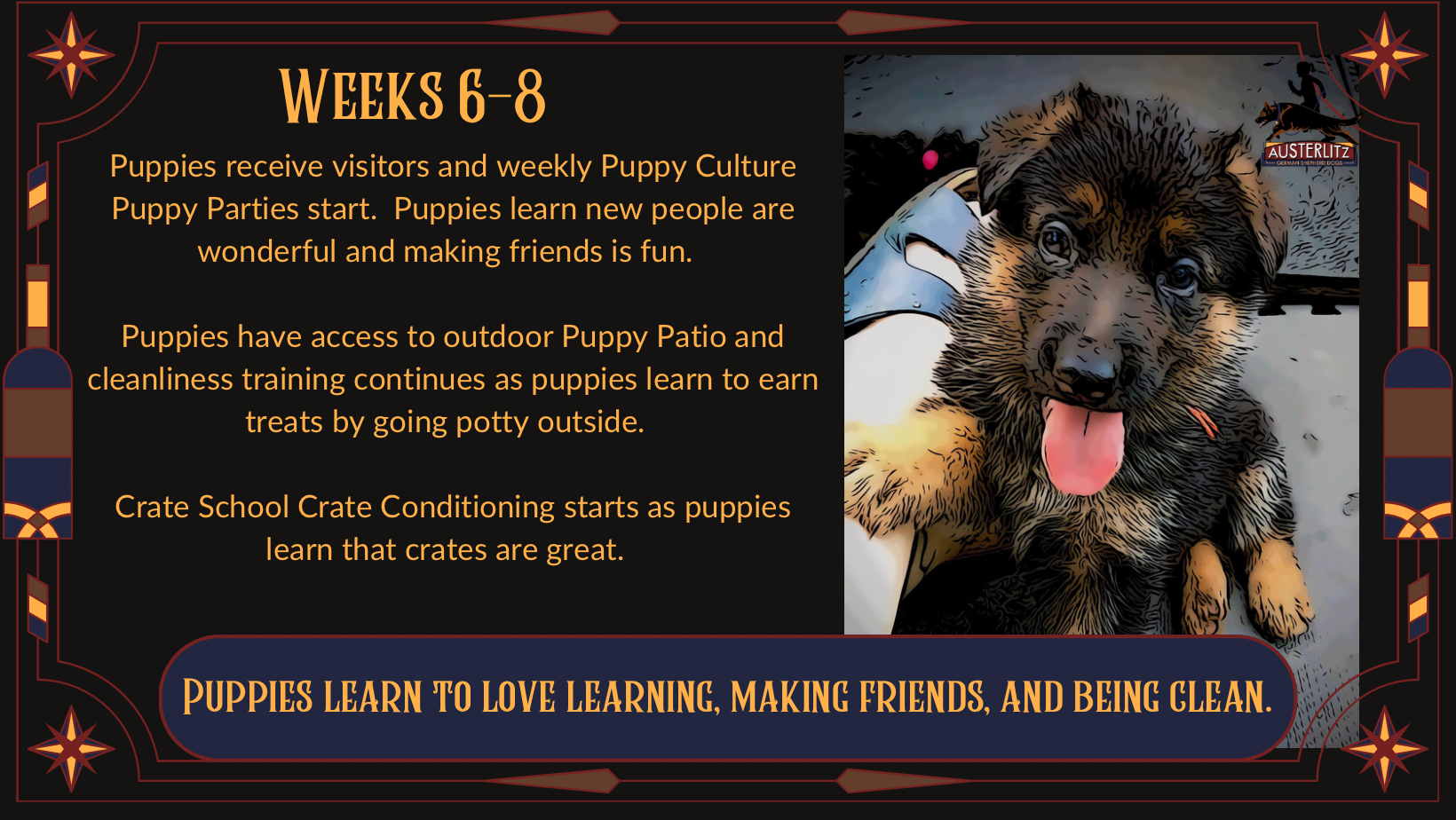
Things get busier and busier as the weeks go by, there is so much puppies need to be exposed to and learn to love, in these first few weeks that benefit them throughout their lives. Putting in this work is our number 1 priority during these formative weeks.
While there is too much to mention, some highlights of our work during weeks 6,7,8 are:
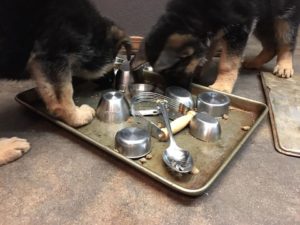
1. Socialization to environments (call the Enrichment Effect), people, and dogs is in high gear. It is not enough that puppies are exposed to things, they must form happy and positive associations with these things to feel confident about them in the future. So we curate our puppies daily lives, showing them exactly what is age appropriate and ensuring they learn only what is beneficial for them, this work is laid out for us in the Puppy Culture protocols.
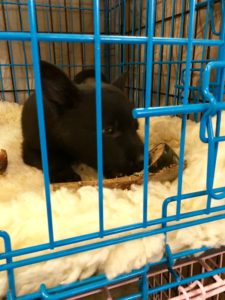
2. Our Crate Conditioning program is started. This work focuses on creating calm and confident feelings around crates and confinement in a curated and incremental manner. New families receive a complementary enrollment in our crate training course for the new puppy owner.
3. Cleanliness training continues, we will add a litter box to the indoor potty zone and puppies will now have access during the day to the outdoor puppy patio via a doggie door from their pen. This allows our puppies to go outside at will and experience all types of weather, outdoor/road sounds, and of course use the potty outside. The large area also decreases bickering and tension between puppies. Of course all new families will receive complementary enrollment in Poop School: House Training.
4. Sound Conditioning: At weaning we start pairing all types of sounds with playtime, mealtime, and other fun activities this teaches puppies that random sounds are fabulous and mean good things are going to happen. Puppies also have access to the outdoors via the puppy patio and so can habituate to the ambient noises of our location (livestock, wildlife, road noise, human noises, mowers and tractors, etc) and since their puppy corral is in the heart of the house they are also exposed to all the noises of our busy household.
5. Learning to LOVE Learning. While it is not beneficial for puppies to be pushed into learning skills like an adult dog, there is benefit to curated learning of some important life skills, and further as part of the Enrichment Effect we focus on helping puppies learn how to communicate needs to us in a socially acceptable way (Manding), to love to problem solve and seek out novel experiences (Enrichment Seekers) with us and their environment, and how to use their behavior as a path to reinforcement.