
In 2026 I and my friends are taking a deep drive into the German Shepherd, to kick things off I'm starting with a series of blogs on the basics of the German Shepherd. This first installment is based on a series of infographics I did for our Everything You Need To Know resource about our program.
I expanded on a simple explanation of German Shepherd colors available in our program to include VERY simplified information on the genetics of standard German Shepherd colors. Since basic color inheritance of the GSD is pretty straightforward Mendelian inheritance a simple explanation is actually all a breeder or fancier needs. Now, some of you may take exception with some of my personal opinions on color, that's fine, I don't expect my opinions to be your opinions and as long as we can discuss it in a productive manner I'm happy to discuss.
If you want to get nit picky on the genetics and my examples being simplified that I'm less interested in and I encourage you to make your own series and present the information in ways that give you happy feelings, I will be happy to read and enjoy them.
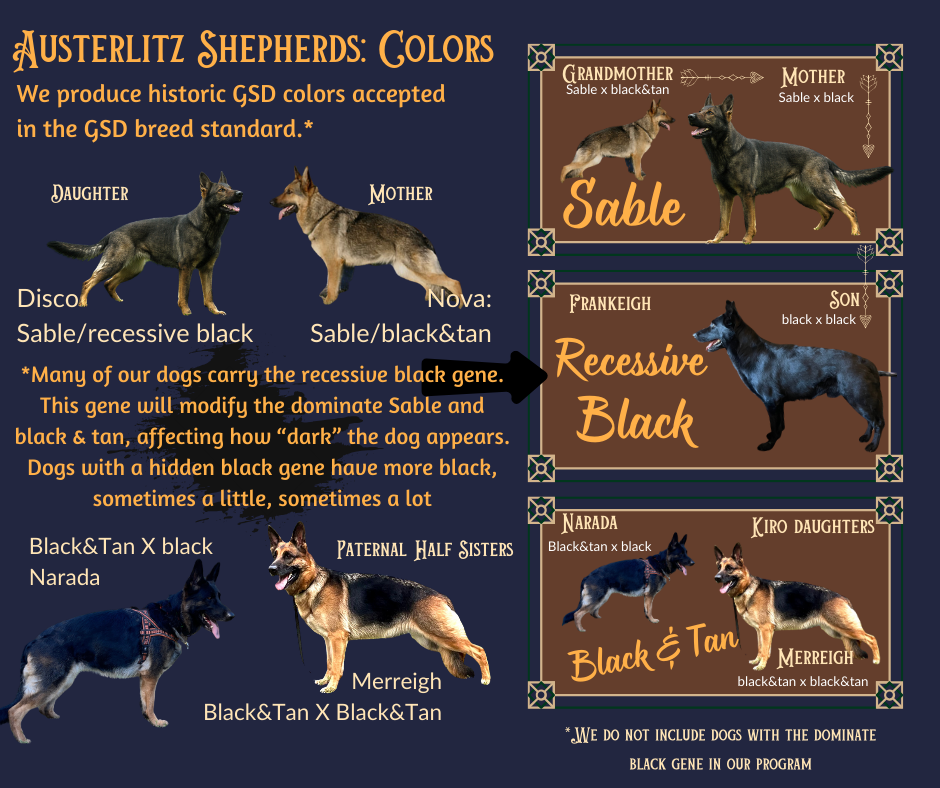
Let's start with the colors we include in our program.
We include all 3 historic and desirable GSD colors in the program: Sable, Black & Tan, and Solid Black (recessive).
While all these colors are equally acceptable, how they are combined is part of good trait management. We strive to produce crisp color patterns, rich core pigment, and variety of genotype.
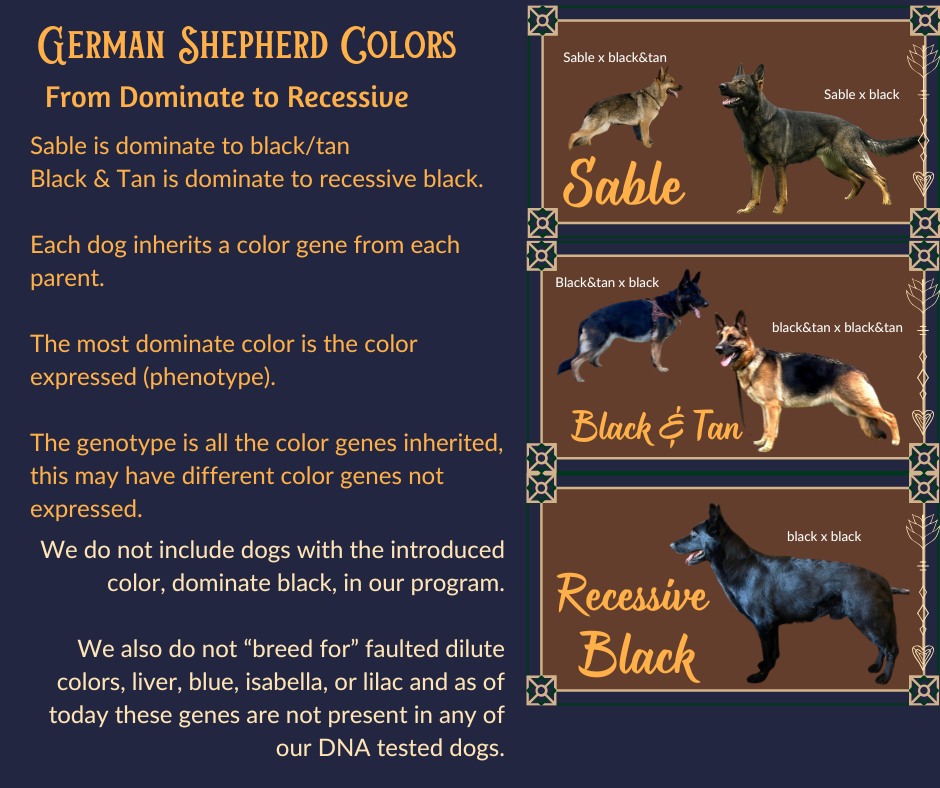
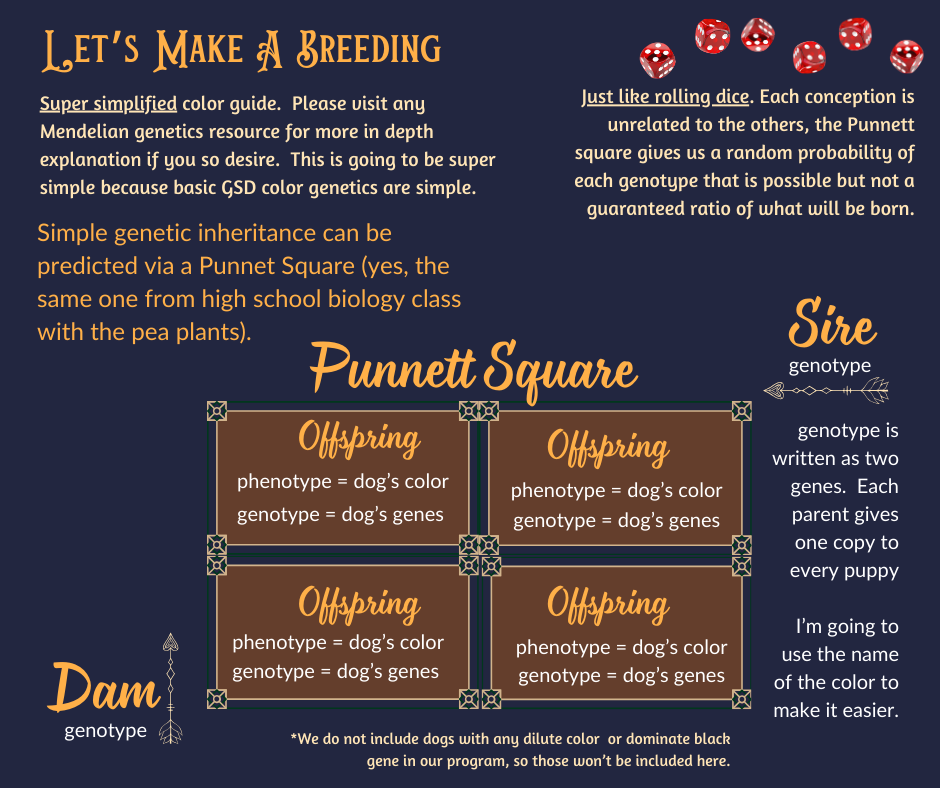
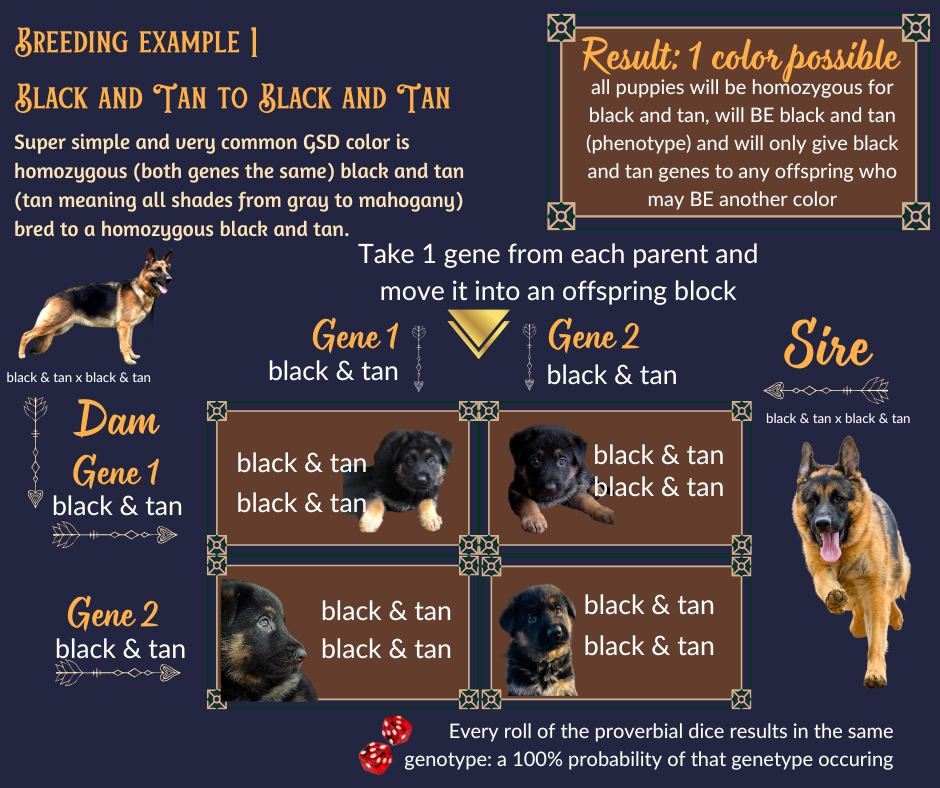
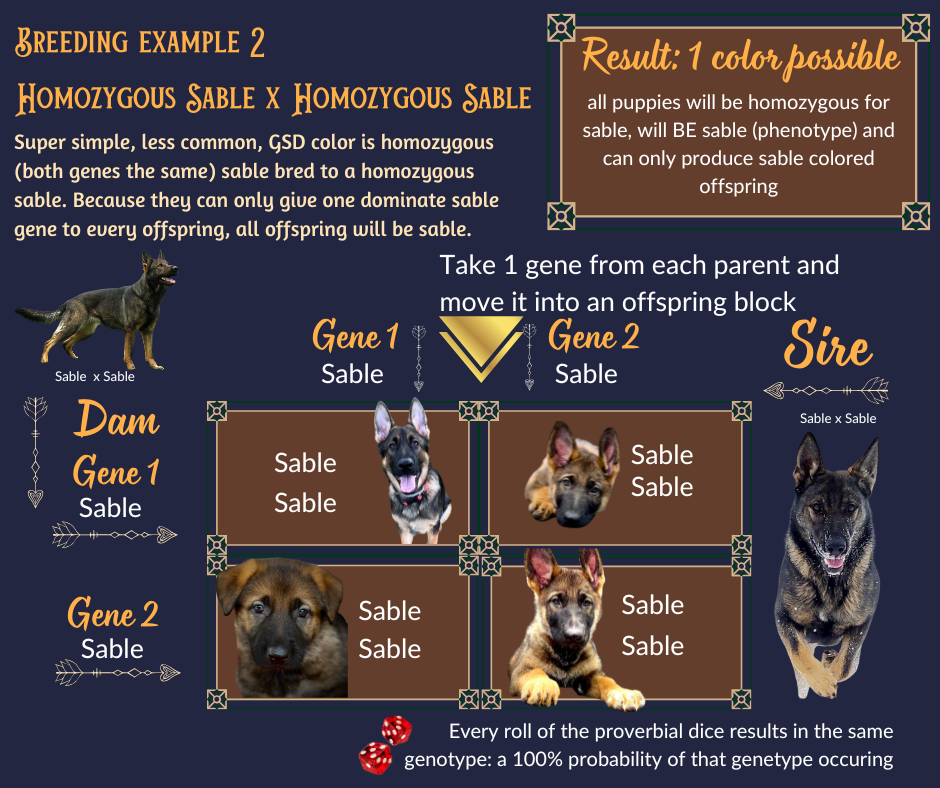
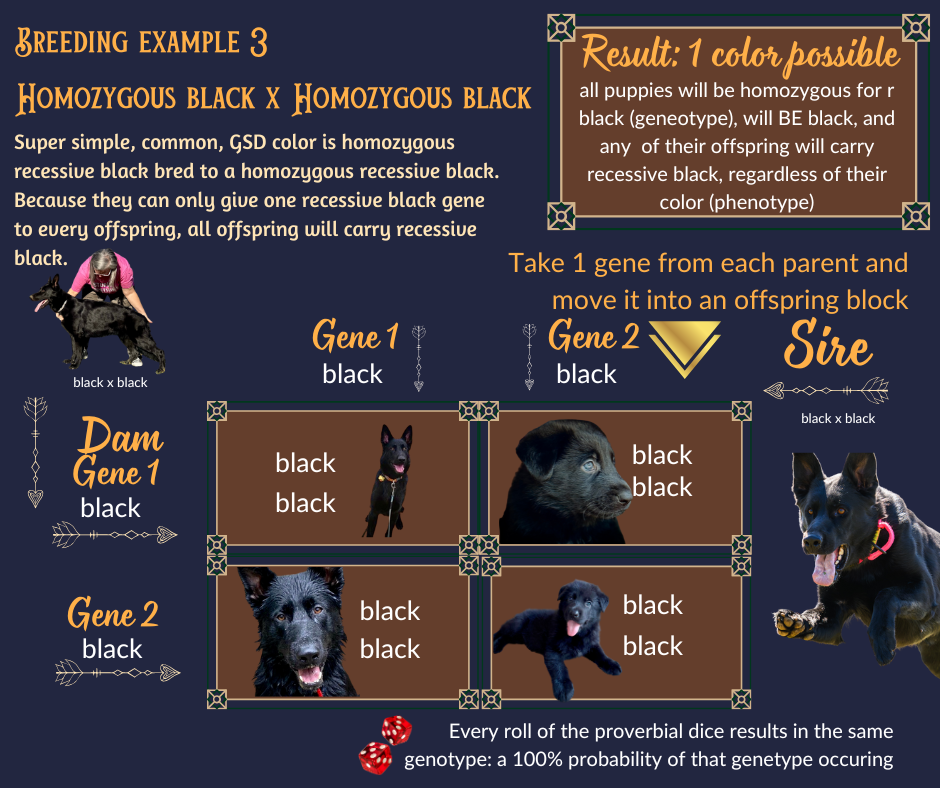
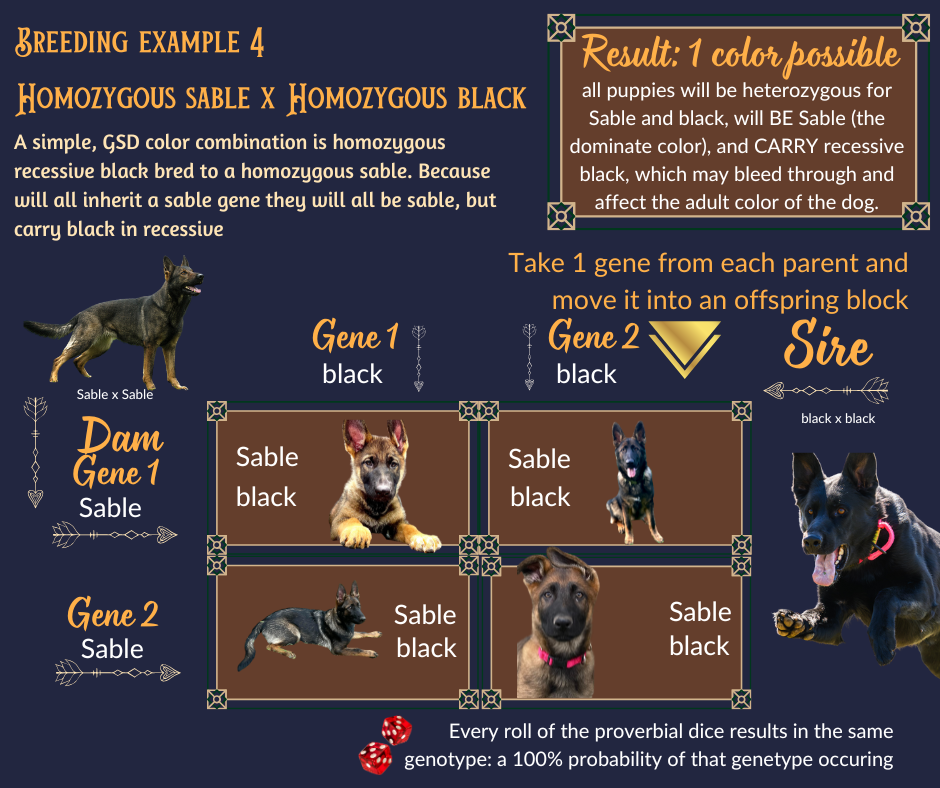
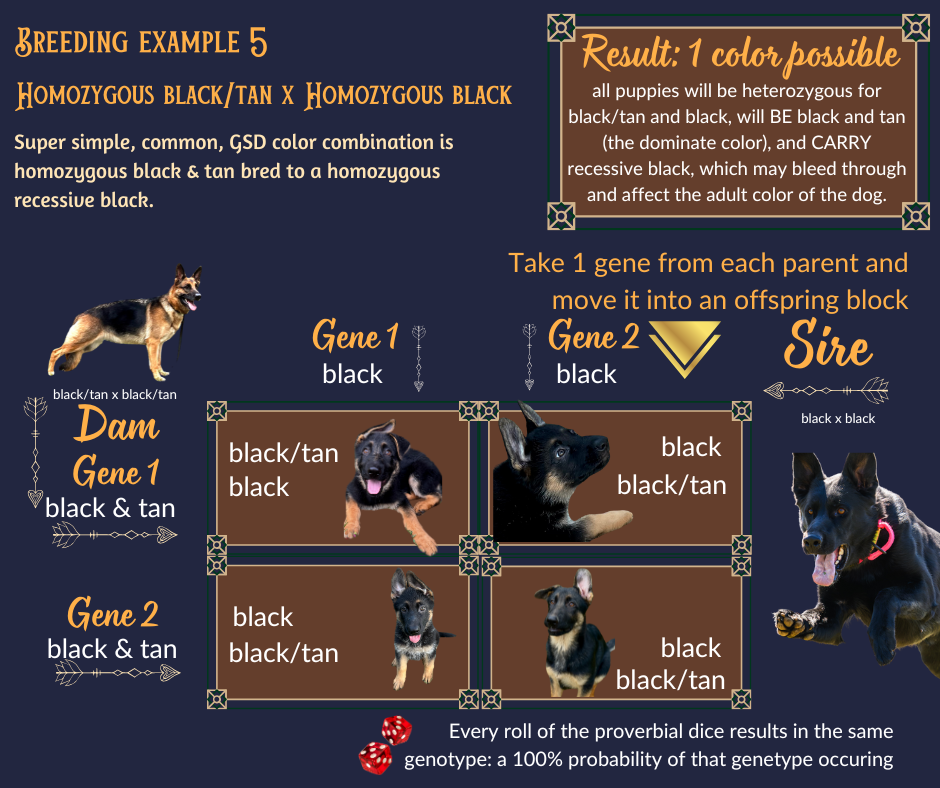
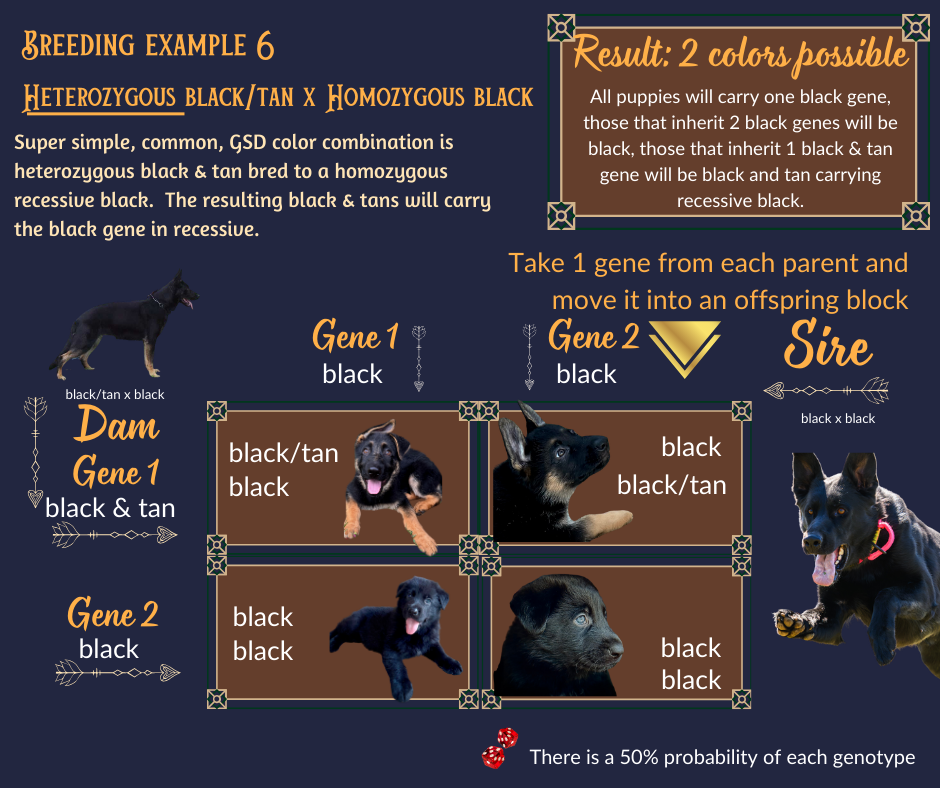
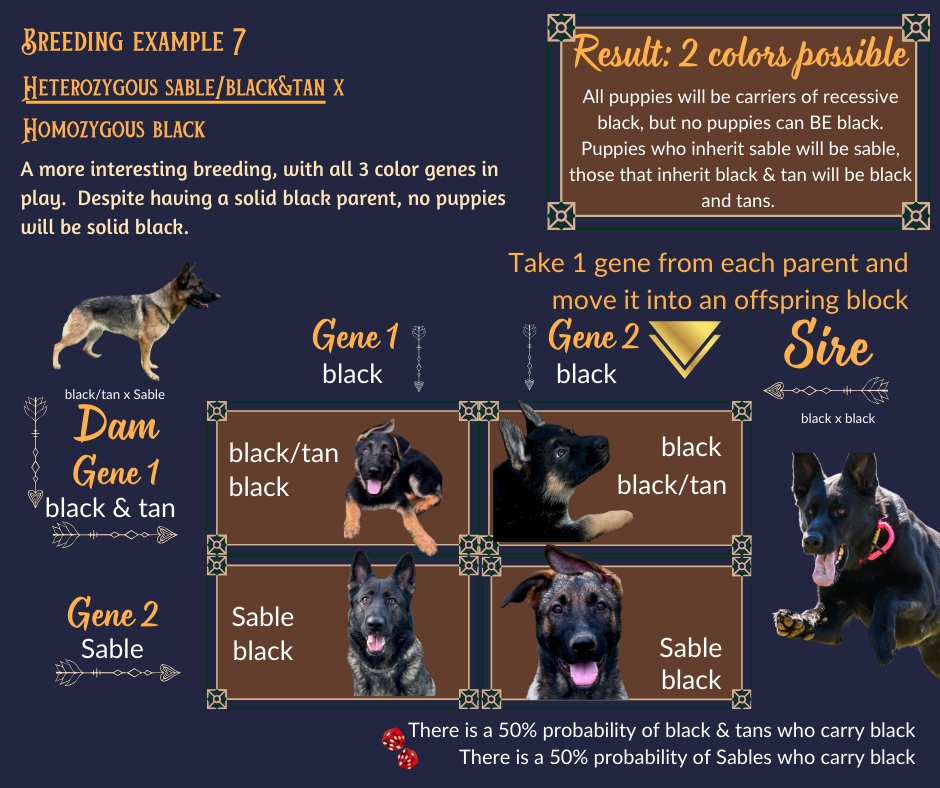
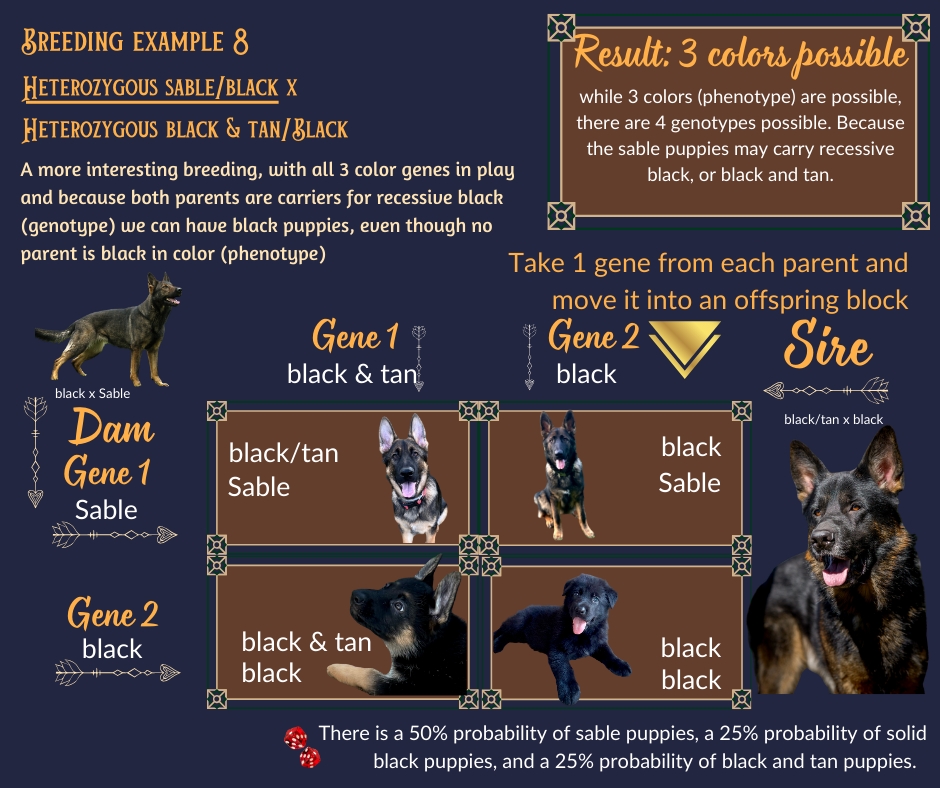
Each dog has two color genes, dominance determines which color gene is expressed. So these puppies all have two copies of the black and tan color gene and so their color (phenotype) will be black and tan. Their genotype is two copies of the black and tan gene. Interestingly, the phenotype (what is seen) is not always the same as the genotype (what is in the genes). Before the advent of DNA testing breeders had to use pedigree research and a trained eye to guess the genotype and do test breedings to prove their hypothesis.
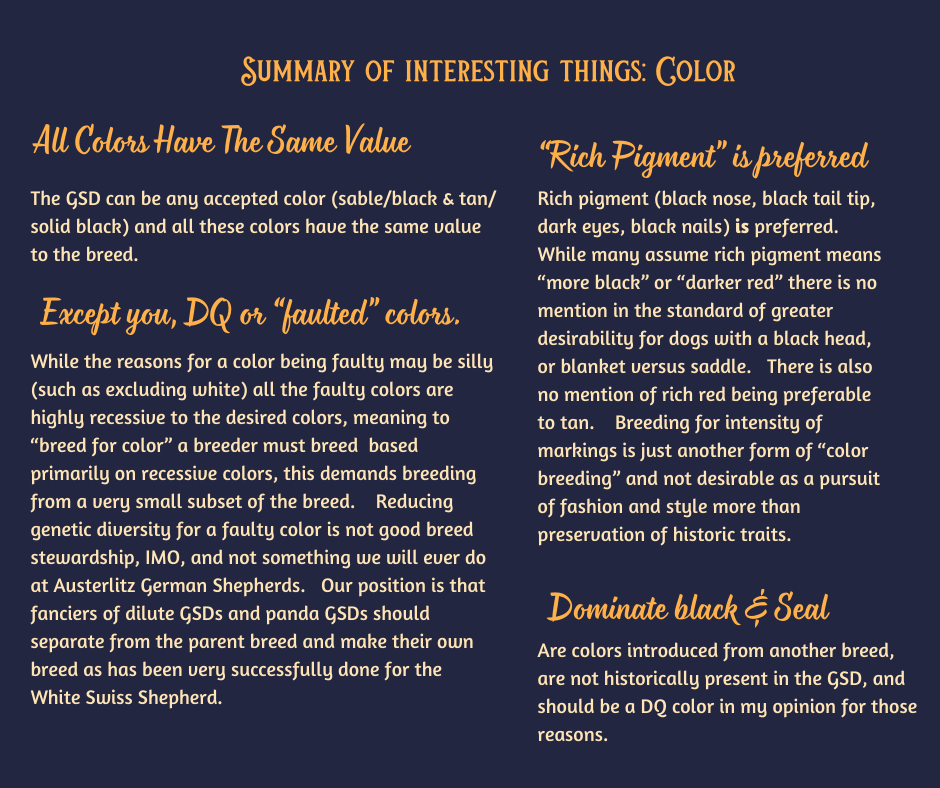
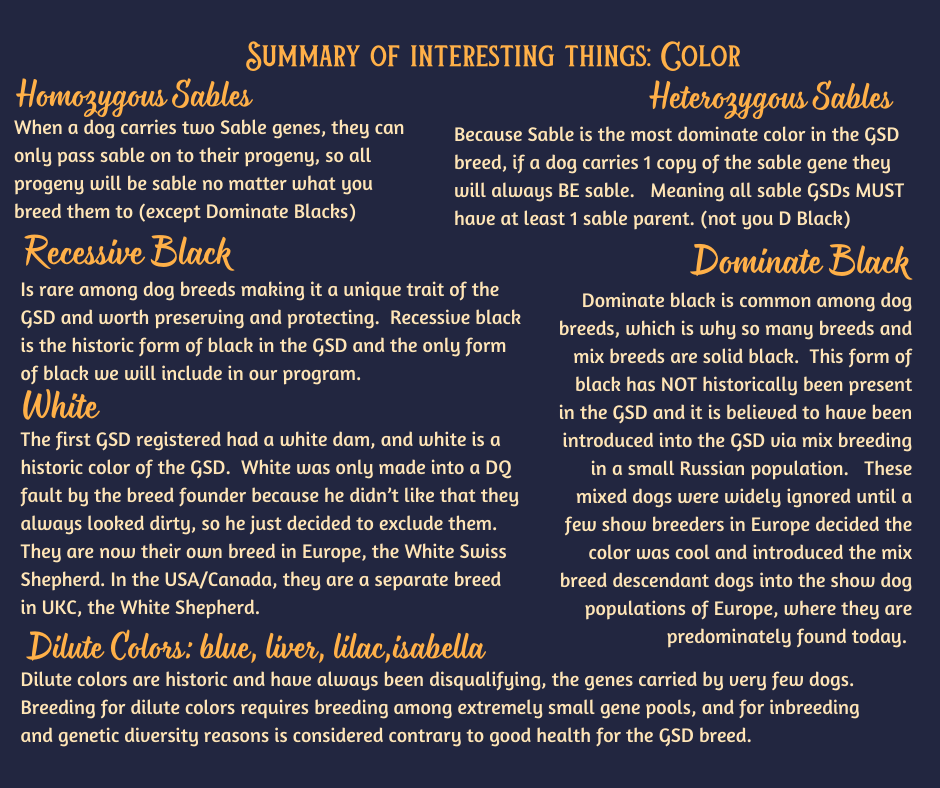
Personally, I don't have any problem with dilute colors, they have always been present in the breed and have always been a DQ fault, along with many other things. I myself think removing a dog from the gene pool over a cosmetic trait is a bad decision for today's German Shepherd. Because all the dilute colors (blue and lilac, liver and isabella) are recessive to all the desirable colors (sable, black & tan, recessive black) when a dilute color does occur randomly (which is super rare but does happen) that dog can be ethically bred to any suitable dog of an acceptable color and no puppies with dilute color will result, allowing the faulty color genes to be removed easily. So, to my sensibilities, dilute dogs who are breed worthy in every other way can be ethically bred BUT when done this way no dilute puppies will result.
The problem arises when breeders decide that dilute colors, being rare, are worth more money so they decide to breed FOR these very rare genetics, meaning that almost all the gene pool of GSDs is rejected because they do not carry the dilute genes and so cannot produce many, if any, dilute offspring. These breeders choose to breed only among a very tiny percentage of GSDs, causing inbreeding depression and voluntarily giving up genetic diversity just to produce a faulted color. This is not IMO good breed stewardship and in contrary to the best interest of the German Shepherd.
I believe a good compromise is for breeders of dilute colors, panda markings, and dominate blacks to be split off from the German Shepherd to form their own color based shepherd breed. The White Swiss Shepherd was taken down this path with very good results.